Hideo Nomo Rookie Card Guide
There was a time when having a Hideo Nomo Rookie Card meant having one of the hottest cards in the hobby. The window wasn’t a big one but it was an important one as the industry was reeling from the impact of the strike that wiped out the 1994 World Series and turned a lot of people away from the game.
The Japanese sensation was his generation’s answer to Fernandomania in more ways than one. Both Nomo and Fernando Valenzuela were electric on the mound in their rookie seasons. Both happened to be Dodgers in their early years. Watching them, anything was possible on any given night, unique windups and all.
Nomo led the National League with 236 strikeouts in 1995, averaging 11.101 Ks per nine inning pitched. His 2.54 ERA was second only to Greg Maddux in the NL. He started the All-Star Game and narrowly beat out Chipper Jones for NL Rookie of the Year honors.
Nomo had a couple more good years left in him but after 1996, he kept his ERA below 4.00 just two more times over the next nine years. The magic was gone but the memories of 1995 remain.
Collectors have 17 different base Rookie Cards to track down. None carry big values today, although there are a couple of parallels that could prove more challenging. Despite his short time dominating the hobby, Nomo remains the top RC in most of the sets he’s a part of, a testament to the overall weak year it was for baseball cards in that regard.
While sets were shifting in a premium direction, none of Nomo’s RCs have things like serial numbers or autographs. Memorabilia cards were still a couple of years away in baseball as well.
Hideo Nomo Rookie Card Guide
The following list highlights all of the base Hideo Nomo Rookie Cards noted with the RC tag in the Beckett database. Inserts are not included. A full checklist of Hideo Nomo cards can be found here.
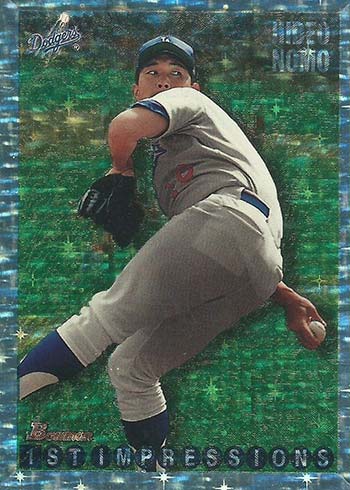
1995 Bowman Hideo Nomo Rookie Card #238
Part of the 1st Impressions subset, Hideo Nomo’s RC in 1995 Bowman Baseball gets the foil treatment. However, it’s not your basic foil. There’s a starry backdrop pattern that runs throughout. The border is also embossed. It might not add much in the way of value, but it does give it a slightly more premium look. Foil cards are one per regular pack and two per jumbo.
Parallels: Gold Foil
Buy on:
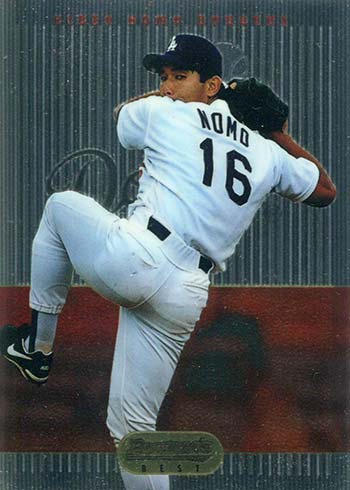
1995 Bowman’s Best Hideo Nomo Rookie Card #R83
1995 Bowman’s Best Baseball is one of the most memorable sets of the year. Rookie Cards of Vladimir Guerrero and, to a lesser extent, Andruw Jones have a lot to do with that but it’s also home to one of Nomo’s top RCs. Prior to Bowman Chrome’s debut in 1997, Bowman’s Best was the king of chromium. This card might not have a full rainbow, but there is a Refractor.
Parallels: Refractors
Buy on:
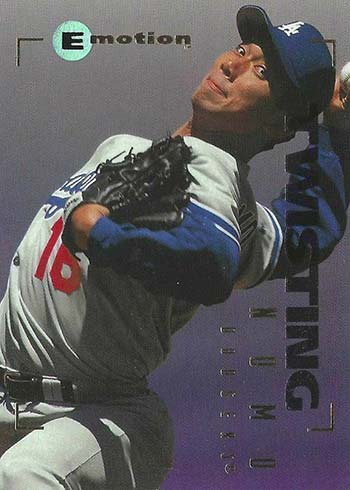
1995 Emotion Hideo Nomo Rookie Card #144
The 1995 Emotion Hideo Nomo RC is one that’s elegant at a glance and goofy when you stop to read it. Players in the set received an adjective to describe their style. Apparently, they couldn’t come up with anything better than “twisting” for the rookie pitcher.
Buy on:
1995 Finest Hideo Nomo Rookie Card #228
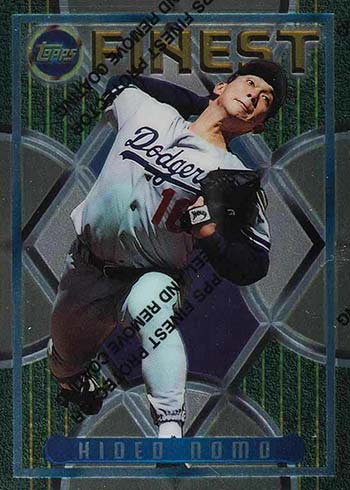
In 1995, Finest and Bowman’s Best were the lone chromium baseball card brands. Just like today, Finest went with big designs. And while modern parallel rainbows have more than a dozen versions, the 1995 Finest Hideo Nomo has just a standard Refractor to go with the base RC. Although not expensive, this ranks as one of the most valuable Hideo Nomo Rookie Cards.
Parallels: Refractors
Buy on:
1995 Flair Hideo Nomo RC #368
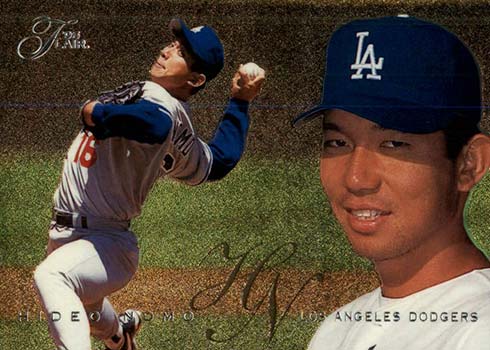
With the number of premium sets growing, the 1995 Flair Hideo Nomo RC comes from Fleer’s answer to the trend. Part of its third year, the dual-photo front carries over. This was a cornerstone of the line, even as it continued to evolve in the years that followed. This is easily one of the classiest looking rookies for the pitcher.
Buy on:
1995 Fleer Update Hideo Nomo RC #175
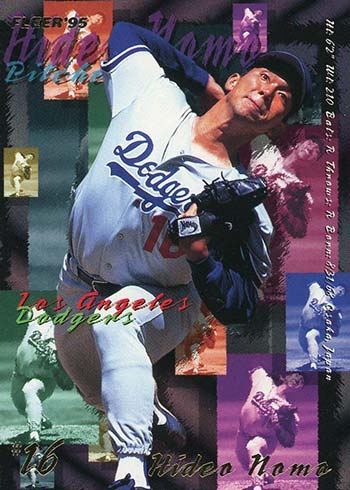
In the 1990s, Fleer Baseball designs were hit or miss. This one is no exception. As a bumper before an interview on MTV back when the channel still had music videos, this might have worked. As a baseball card design, it was dated not long after the set released. Rather than going the box set route like past Fleer Update sets, the card maker opted for packs and a fuller product in 1995. With so many Hideo Nomo RCs that use technology for flash, this one fades.
Buy on:
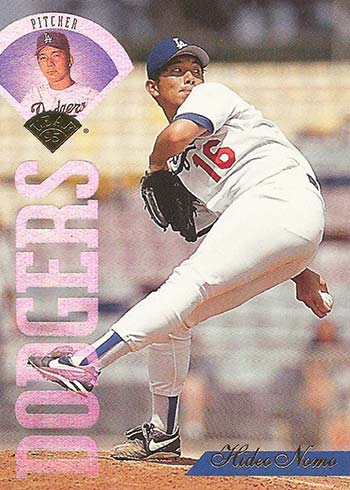
1995 Leaf Hideo Nomo RC #267
1984 Topps meets the future. That might be the best way to describe Nomo’s Leaf RC. The inset portrait and vertical team name running up the side evoke memories of the classic ’80s set. But the holographic highlights add a distinctly modern approach. It’s another attractive card for Nomo from a largely overlooked set today.
Buy on:
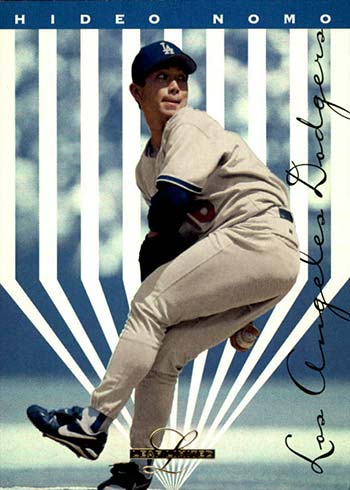
1995 Leaf Limited Hideo Nomo Rookie Card #64
Donruss’ entry into the high-end market, the 1995 Leaf Limited Hideo Nomo has a rainbow foil backdrop and additional gold foil highlights. Add in multiple types of fonts and you’ve got a very ’90s baseball card.
Buy on:
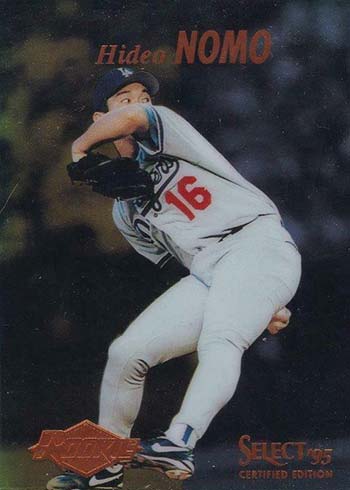
1995 Select Certified Hideo Nomo RC #98
Thick, chrome and glossy—from a materials perspective, this is one of Nomo’s most unique rookies. However, with a largley minimalist design, it’s something that’s really noticed when the card is held, not just looked at. Mirror Gold parallels took off with the 1996 due to their extremely low print runs. Here, the parallels are a modest 1:5 packs and not nearly as valuable.
Parallels: Mirror Gold
Buy on:
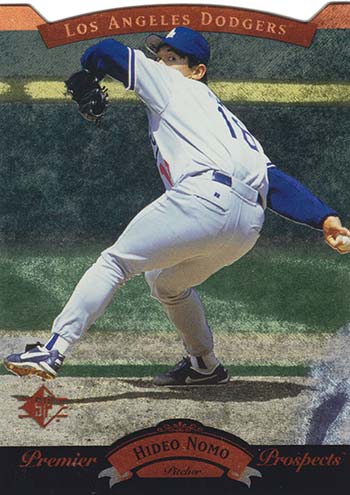
1995 SP Hideo Nomo RC #14
Believe it or not, SP was once one of the brands on the highest of the high-end spectrum in sports cards. It’s still popular today, but this card shows just how far “premium” has come. In 1995, it was foil and a die-cut top. Now, we’re up to autographs, patches and incredibly small print runs.
Parallels: Silver
Buy on:
1995 SP Championship Hideo Nomo RC #1
Nomo leads off 1995 SP Championship Baseball, a spinoff of the regular SP line that was intended for the retail market.
Parallels: Die Cuts
Buy on:
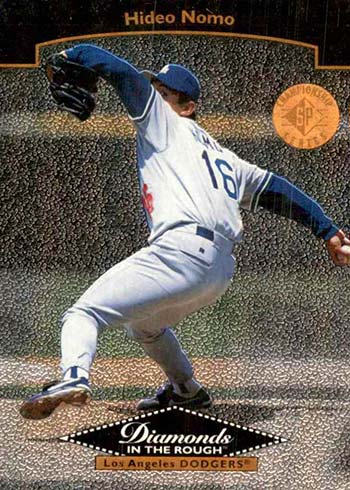
1995 Stadium Club Hideo Nomo RC #556
Typically when you think “Stadium Club,” images of stellar photos come to mind. That’s not the case here. Nomo’s 1995 Stadium Club RC isn’t horrible but it’s not all that memorable, either.
Parallels: Members Only, Super Team World Series
Buy on:
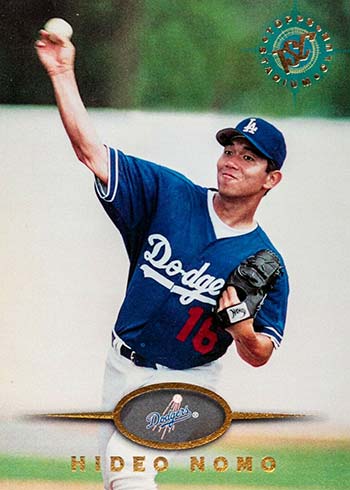
1995 Summit Hideo Nomo RC #141
Pinnacle Brands never met a mountaintop-inspired brand name it didn’t like. 1995 Summit Baseball takes a more elegant approach to the then new fandangled process of gold foil. It’s clean and achieved its intention of straddling that space between entry-level and premium.
Parallels: Nth Degree
Buy on:
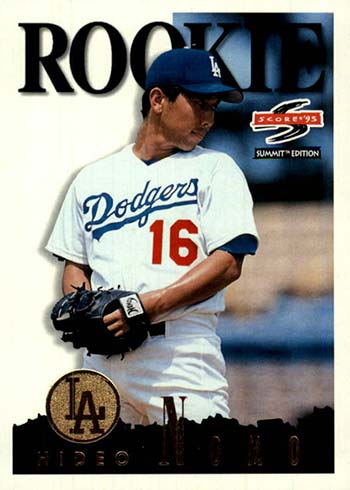
1995 Topps Traded Hideo Nomo Rookie Card #40T
Besides being Nomo’s flagship Topps RC, this card offers a different look at the pitcher’s unique throwing motion. There are several early cards that show his windup, but this one offers a full side view of the follow-through. It’s both awkward and mesmerizing at the same time.
Buy on:
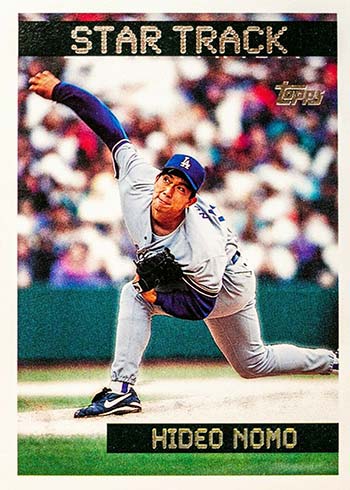
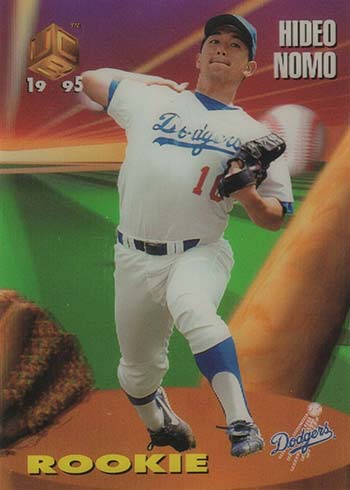
1995 UC3 Hideo Nomo Rookie Card #97
1995 UC3 is one in a long line of baseball card sets that use 3D as its gimmick. This one gets bonus points for looking even more dated thanks to its early computer generated background that looks like something you’d expect to find on a baseball-themed episode of Beast Wars or Jimmy Neutron.
Parallels: Artist’s Proof
Buy on:
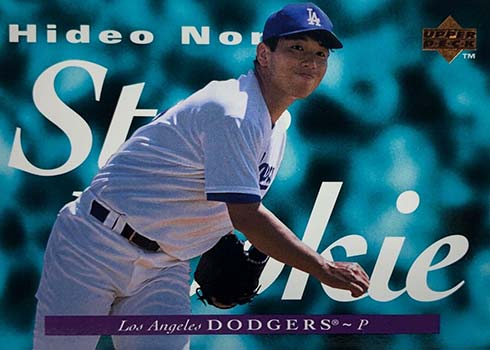
1995 Upper Deck Hideo Nomo Rookie Card #226
As far as core flagship lines go, Upper Deck was still on top when it came to overall quality. The 1995 Upper Deck Hideo Nomo is part of the long-running Star Rookie subset. Instead of a simple nameplate icon that Star Rookies get in a lot of sets, the notation dominates the background.
Electric Diamond parallels change up the foil company logo on the front.
Parallels: Electric Diamond, Electric Diamond Gold
Buy on:
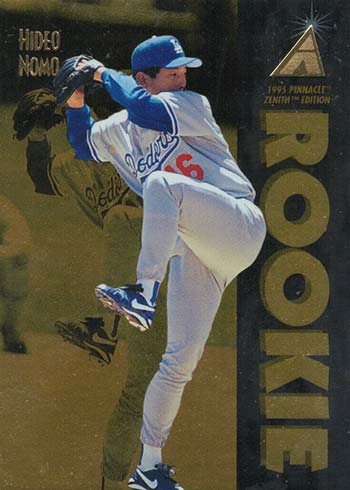
1995 Zenith Hideo Nomo Rookie Card #149
Another new line from Pinnacle named for mountain peaks, Zenith took things to the high-end. In 1995, that meant thick foil stock. It may not have stood the test of time, but for the era, it was solid.
Buy on: